

All fantasy and sci-fi stories have magical systems. Even in sci-fi, where we mostly don’t think about “magic,” we still find magical systems. To paraphrase Arthur C. Clarke, any sufficiently advanced technology is indistinguishable from magic.
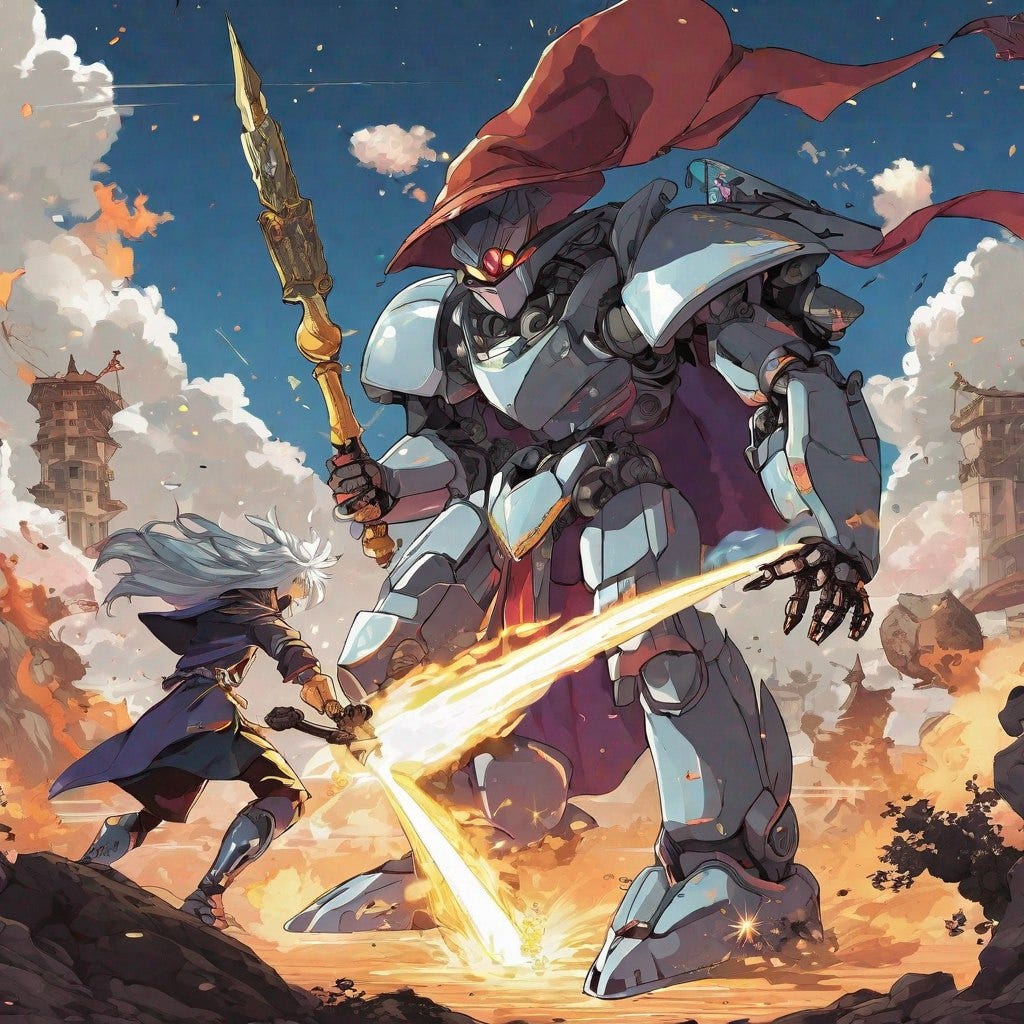
A magical system is just how things work in a fantastic world. Typically, you would think of how spells, potions, and dragons behave. However, in sci-fi, how fantastic technology works —think of Asimov’s Three Laws of Robotics, the Hawking engine in The Expanse, or the Time Tombs in Hyperion— is also a magical system.
We can classify magical systems in a spectrum from soft to hard magic in terms of how transparent and well-explained they are. On the softcore extreme, you have things like LOTR, where you don’t really ever know what the hell a Gandalf or a Tom Bombadil is or the extent of his (its?) powers. You get the idea that there is some powerful magic behind these beings, that you only get glimpses of, but never a really profound explanation —not even by reading all the supplementary material.
If you want sci-fi examples of soft magic, just consider almost anything Bradbury wrote. Yes, technically is more sci-fi than traditional fantasy, but there is also barely a vague idea of how things work. You never get a full explanation of any tech's functioning principles. Another perfect example is Stranger in a Strange Land.
On the hardcore extreme, you have sci-fi authors like Asimov, Clarke, and Herbert, who make every attempt to justify and explain how most of their world-building works. Hard magic doesn’t necessarily mean realistic. It just means well-explained, with transparent rules that readers can use to understand and predict how things will behave. The alchemy system in Full Metal Alchemist is a perfect example of totally unrealistic hardcore magic.
Now, as usual in creative writing, neither extreme is necessarily better. They both serve a narrative purpose and can be exploited to perfection. Soft magic systems give the reader a sense of wonder, while hard magic allows for puzzle-solving. In either case, you can use the magic as another character, and mastering it can become a central plot element.
The best authors even mix and match soft and hard elements in the same story. The Monolith in 2001 is an example of an unexplained piece of magical tech placed in the middle of a very hardcore universe precisely to produce this sense of wonder in the reader. By contrasting the rational, well-explained scientific world where the protagonists live with the unfathomable power of the monolith, Clarke manages to both surprise you and convince you everything that happens could be real.
¿What are some examples of hardcore and softcore magical systems in your favorite stories?
I'm an avid sci-fi and fantasy reader, with stronger leanings towards fantasy. I've never thought of juxtaposing magical systems with technological systems. It makes sense! Very clever.
One of my favorite soft/hard combinations of a magical system is Lev Grossman's Magician's Trilogy. Magic is a pedagogy. It's something studied and learned with academic regard, with studious and scholarly excellence. And yet, no one really knows where it comes from. It always remains a little unruly, and unpredictable, never fully tamed or controllable.
Brandon Sanderson spends a lot of time working out his magic systems, making them not consistent and predictable, but also working them into his character arcs in clever ways.
My favorite series of his is the Stormlight Archive, but Mistborn is a lot of fun, too.